
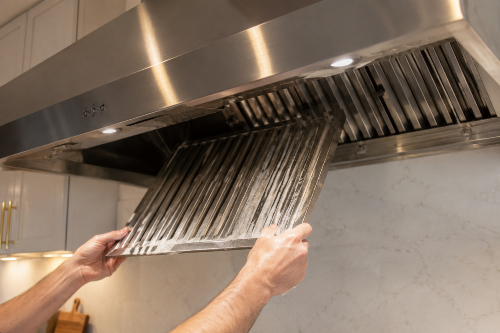
A Wolf range hood is built to capture thousands of cubic feet of airborne grease, smoke, moisture, and heat every single minute. However, even the highest-grade luxury ventilation unit will suffer a severe drop in performance if grease builds up inside the baffle filters, ductwork, and blower housing.
To restore maximum cubic feet per minute (CFM) extraction and keep your kitchen air clean, you need to degrease the heavy-duty stainless steel baffle filters every month, clean the interior hood canopy, inspect the ductwork for blockage, and maintain the blower wheel.
Below is your complete guide to keeping your Wolf ventilation system running at peak efficiency.
Why Proper Maintenance Controls Airflow and Safety
Wolf range hoods rely on heavy-gauge stainless steel baffle filters rather than aluminum mesh filters. Baffle filters work through centrifugal force: as grease-laden air hits the curved stainless steel channels, the direction of the airflow shifts rapidly. The heavier grease drops settle into the filter trough, while the purified air passes through the exhaust ducting.
When these baffles become clogged with coagulated lipids, air resistance increases significantly.
[Heavy Grease Saturation] ➔ [Increased Air Resistance] ➔ [Higher Blower Load] ➔ [Restricted CFM & Fire Risk]This restriction leads to several issues across your appliance and kitchen environment:
- Restricted Static Pressure: The blower works significantly harder against backpressure, reducing actual exhaust airflow.
- Excess Noise: Air forced through narrowed gaps creates high-pitched whistling and turbulence.
- Increased Fire Hazard: Liquefied grease trapped near high-heat gas burners or induction surfaces poses a direct ignition risk.
- Surface Degradation: Acidic grease deposits can gradually pit high-grade 304 stainless steel if left uncleaned.
Step-by-Step: Deep Cleaning Wolf Baffle Filters
Wolf baffle filters are engineered for durability and high heat tolerance. Cleaning them requires breaking down polymerized fats without damaging the metal finish or internal spring mechanisms.
Required Materials
- Commercial food-grade degreaser (or a heavy-duty dish soap like Dawn Platinum)
- Washing soda (Sodium Carbonate) or Baking Soda
- Non-abrasive microfiber cloths and a soft-bristle nylon brush
- Hot water (minimum 140°F / 60°C)
- Microfiber drying towels
Phase 1: Removal and Soaking
- Power Down the Appliance: Shut off power to the hood at the circuit breaker or control switch to prevent the automatic thermostat sensor from turning on the blower unexpectedly.
- Remove the Grease Drip Trays: Locate the removable drip cups/troughs along the rear lower rim of the canopy. Slide or unsnap them carefully to avoid spilling collected oils.
- Unlatch the Baffle Filters: Hold the filter securely with both hands. Push up against the spring-loaded top edge, tilt the bottom edge outward away from the hood, and pull down gently.
- Prepare the Hot Soak: Fill a deep sink or basin with boiling-hot water. Add 1/2 cup of washing soda and 2 tablespoons of concentrated liquid dish detergent. Submerge the baffles completely for 20 to 30 minutes.
Phase 2: Agitation and Rinsing
- Scrubbing: Use a soft-bristle nylon brush to clean inside the U-shaped baffle channels. Avoid wire brushes, steel wool, or abrasive scouring pads, as these will scratch the grain of the stainless steel.
- Dishwasher Method: Wolf stainless steel baffle filters are dishwasher-safe. Place them vertically in the lower rack on a heavy-duty pot-and-pan cycle with an anti-grease detergent. Avoid detergent tablets containing chloride or citrus additives, which can discolor stainless steel over time.
- Rinse thoroughly: Flush out all residual soap and loosened grease with boiling-hot tap water to prevent a hazy film from forming on the metal.
Cleaning the Interior Canopy and Blower Housing
Removing grease from the filters is only half the battle. Heavy vapor also condenses along the internal canopy walls, transition ducting, and fan housing.
| Zone | Primary Contaminant | Recommended Cleaner |
|---|---|---|
| Interior Steel Walls | Condensed Grease | Warm Water + Degreaser |
| External Stainless | Fingerprints, Dust | Stainless Steel Polish |
| Blower Impeller | Airborne Oils | Damp Cloth (No Spraying) |
| Halogen/LED Lenses | Film Layer | Isopropyl Alcohol Wipes |
Cleaning the Interior Shell
- Wipe down the interior stainless steel canopy using a microfiber cloth damp with warm water and degreaser. Work exclusively along the direction of the brushed steel grain.
- Avoid spraying liquid cleaners directly into the internal blower motor, halogen/LED light sockets, or heating lamp controls.
- Dry the internal surfaces thoroughly using a clean towel. Moisture left near internal wiring or fan components can trip electrical breakers or cause internal corrosion.
Maintaining the Blower Assembly
Whether your Wolf range hood utilizes an internal, in-line, or remote exterior blower, the fan impellers must remain balanced and clear of debris.
- Check the Fan Blades: Inspect the curved fins of the squirrel-cage fan. If thick grease coats the fins, carefully wipe each blade with a damp microfiber cloth treated with a mild degreaser.
- Avoid Unbalancing: Do not bend or dislodge the small metal balance clips attached to the fan blades during cleaning.
- If you suspect the internal blower motor has suffered electrical failure, bearing wear, or severe mechanical blockage, consulting a specialized repair authority like Davis Sub-Zero Repair ensures factory-spec diagnostics and genuine replacement parts.
Restoring and Polishing Exterior Stainless Steel
Maintaining the exterior of your Wolf vent hood ensures aesthetic consistency with the rest of your luxury kitchen appliances while protecting the surface against corrosion.
[Apply Mild Soap/Water] ➔ [Wipe Along Metal Grain] ➔ [Rinse & Dry] ➔ [Apply Polish Film]- Initial Surface Wash: Clean dust and grease splashes with warm, soapy water applied via a soft sponge.
- Remove Stubborn Marks: For water spots or fingerprint smudges, apply a non-abrasive stainless steel cleaner or a 50/50 mix of distilled white vinegar and water.
- Grain Direction: Always rub in parallel lines following the direction of the brushed metal finish. Wiping against the grain creates tiny scratches that trap dirt and dull the mirror finish.
- Protective Polish Finish: Finish with a high-grade stainless steel polish or a drop of food-grade mineral oil on a microfiber cloth. This creates a hydrophobic barrier that repels fingerprints and future grease droplets.
Evaluating Ductwork, Static Pressure, and Exterior Vents
If your Wolf range hood continues to pull smoke poorly despite clean filters, the obstruction is likely inside your ducting or damper assembly.
Inspect the Backdraft Damper
The backdraft damper consists of metal flaps located where the wolf range hood transitions into the main exhaust duct. Its job is to open under blower pressure and snap shut when off to prevent cold outside air from entering your home.
- Check Movement: Ensure the damper flaps swing freely without catching on mounting screws or accumulated grease.
- Check the Spring: Damaged or sticky damper flaps can freeze half-open, reducing duct volume by up to 50%.
Verify Duct Diameter and Run Length
Wolf high-CFM blowers (typically rated between 600 CFM and 1500 CFM) require rigid, smooth-walled galvanized metal ducting.
- Duct Sizing: Most residential Wolf systems require 8-inch, 10-inch, or 12-inch round rigid ductwork depending on total BTU output.
- Avoid Flexible Ducting: Flexible ribbed ductwork creates intense friction, severely reducing air velocity and capturing heavy grease in its ridges.
- Exterior Wall/Roof Cap: Inspect the exterior vent hood termination outside your home. Ensure the louvered dampening doors or protective wire mesh are free from bird nests, lint, or debris.
Recommended Maintenance Schedule
To keep your ventilation system operating quietly and cleanly, follow this simple maintenance routine:
| Frequency | Target Area | Action Item |
|---|---|---|
| Weekly | Exterior Canopy | Quick wipe-down along grain |
| Monthly | Baffle Filters | Hot degreasing soak or wash |
| Every 3 Months | Drip Cups & Interior | Deep degrease interior shell |
| Every 6 Months | Blower Assembly | Inspect blades and housing |
| Annually | Ductwork & Dampers | Full pressure/damper check |
When to Seek Professional Service
While routine filter cleaning and exterior wiping are easy DIY tasks, complex electrical, mechanical, or structural airflow issues require factory-trained expertise. Contact a certified service provider if you notice any of these warning signs:
- The blower vibrates excessively, wobbles, or makes squealing/grinding noises during operation.
- The automatic thermal switch fails to trigger the blower when wolf cooktop heat surges.
- The control switches or variable speed dials do not respond or feel stuck.
- Airflow remains weak despite spotless baffles and open exterior wall caps.
For high-end appliances, prompt professional care prevents small mechanical failures from turning into costly replacements. If you require specialized service for your premium kitchen setup, scheduling a diagnostic visit with Davis Sub-Zero Repair
will restore your luxury ventilation system to factory specifications.
Frequently Asked Questions
How often should I clean my Wolf range hood baffle filters?
For normal residential cooking, clean your baffle filters once a month. If you frequently cook with high heat, perform wok frying, or sear meats daily, clean the filters every two weeks to maintain optimal exhaust velocity.
Can I clean Wolf baffle filters in the dishwasher?
Yes. Wolf baffle filters are made of commercial-grade stainless steel and are dishwasher-safe. Place them in the bottom rack on a high-heat cycle using standard detergent. Avoid harsh chlorine bleaches or acidic cleaning additives.
Why is my Wolf range hood still noisy after cleaning the filters?
Excessive noise often points to high static backpressure caused by a stuck backdraft damper, undersized ductwork, or a loose blower wheel. Check that the damper flaps open completely when the unit is powered on.
Can I use aluminum mesh filters instead of stainless steel baffles?
No. Wolf range hoods are precision-engineered to operate with specific static pressures using heavy-duty stainless steel baffle filters. Replacing them with light aluminum mesh filters will disrupt airflow balance and increase fire risks.
What causes oil to drip from my range hood onto the cooktop?
Dripping oil indicates that either the lower grease drip trays are full or the baffle channels are completely saturated with grease. Regular monthly soaking and draining will prevent oil runoff.